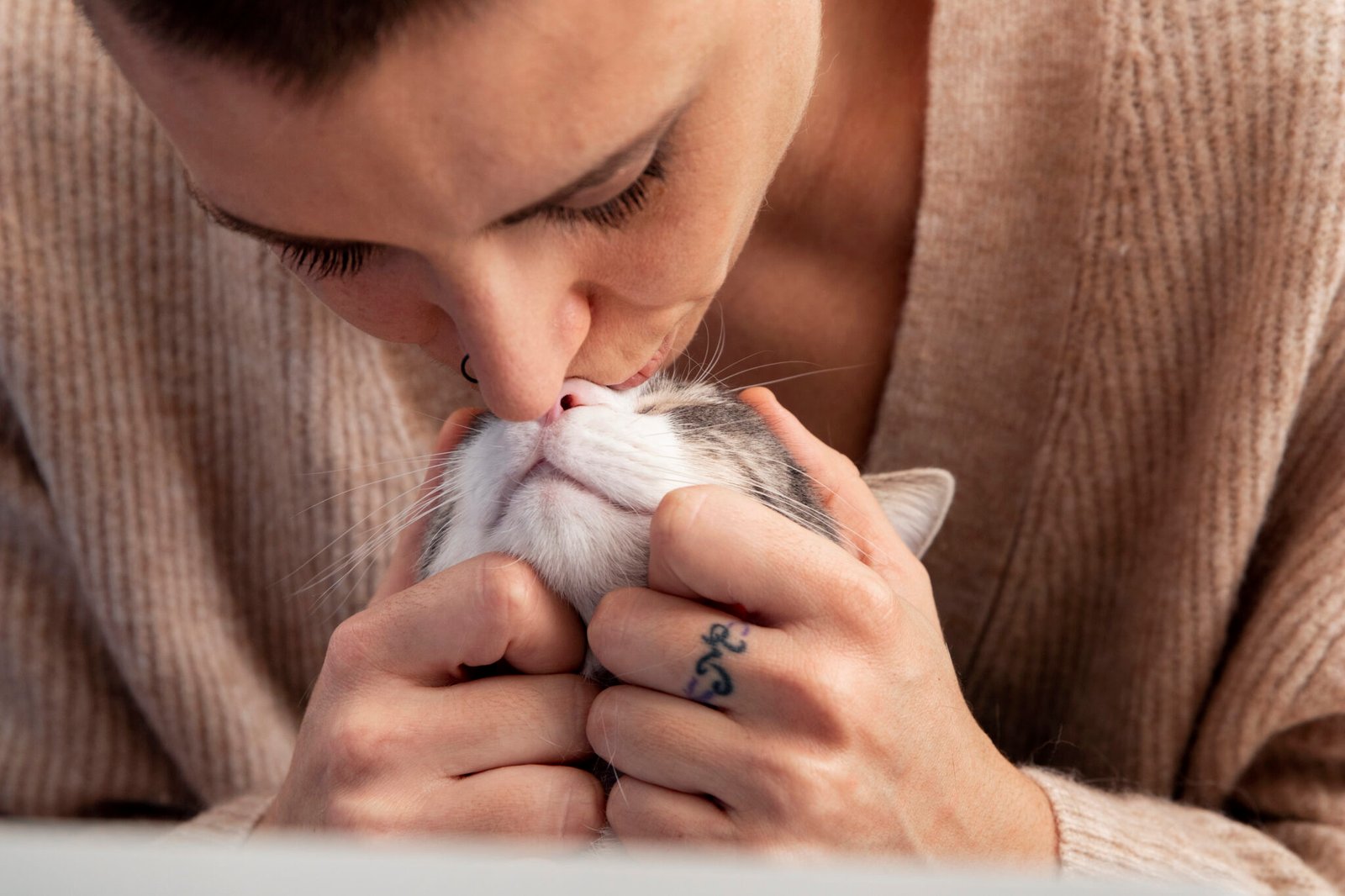

If you’ve ever leaned down to kiss your cat on the head and wondered whether cats understand kisses the same way humans do, you’re not alone. For many cat parents, kissing is a natural way to show love. But cats don’t always respond the way humans expect. So the big question is: do cats understand kisses, or are we speaking a completely different emotional language?
Let’s explore what science and feline behavior tell us.
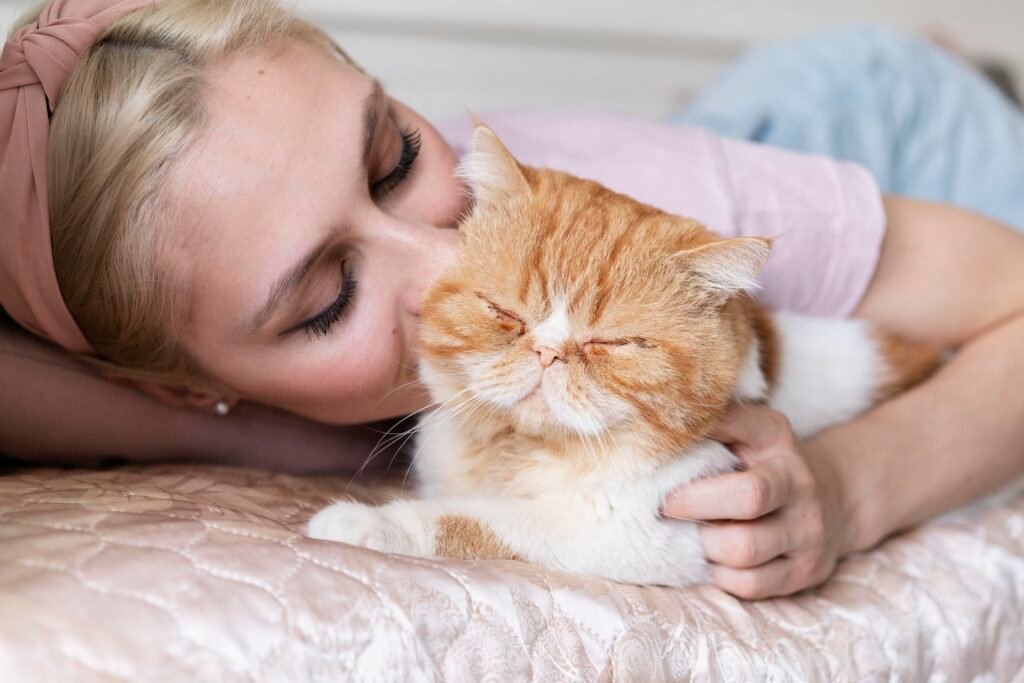
How Cats Naturally Show Affection
Cats did not evolve with human-style displays of affection. In the feline world, love looks very different.
Instead of kisses, cats typically express closeness through:
- Slow blinking
- Head bunting (gently bumping heads)
- Grooming each other
- Choosing to sit or sleep nearby
- Purring in a relaxed context
These behaviors are subtle but meaningful. When a cat slow-blinks at you, it is often compared to a feline version of saying “I trust you.”
What a Kiss Means to a Cat
From a scientific perspective, cats do not instinctively understand kissing as a symbol of affection. Kissing involves facial proximity, pressure, and sometimes sound, which can be confusing or even threatening for some cats.
However, cats are highly capable of associative learning. Over time, they can learn that a kiss from their human is usually followed by positive outcomes such as gentle petting, calm interaction, or a sense of safety.
In other words, your cat may not understand the concept of a kiss, but they can understand the context.
Why Some Cats Tolerate Kisses and Others Don’t
Just like people, cats have individual personalities. Research in feline temperament shows that cats vary widely in sociability, tolerance of handling, and sensitivity to touch.
Several factors influence how a cat reacts to kisses:
- Early socialization with humans
- Past experiences with handling
- Genetic temperament traits
- Current emotional state
- Trust level with the person
A cat that was gently handled as a kitten is more likely to tolerate close facial contact later in life.
Signs Your Cat Is Comfortable With Kissing
If your cat accepts kisses, they may show signs such as:
- Remaining relaxed and still
- Purring softly
- Slow blinking after contact
- Leaning into you
- Staying nearby instead of moving away
These behaviors suggest that your cat associates your kiss with safety or affection.
Signs Your Cat Is Uncomfortable
Cats are excellent communicators, but humans often miss the signals. If your cat reacts with any of the following, it’s best to stop:
- Ears turning sideways or flattening
- Tail flicking or swishing
- Stiff body posture
- Pulling away or ducking the head
- Growling or sudden movement
Respecting these signals is essential for maintaining trust.
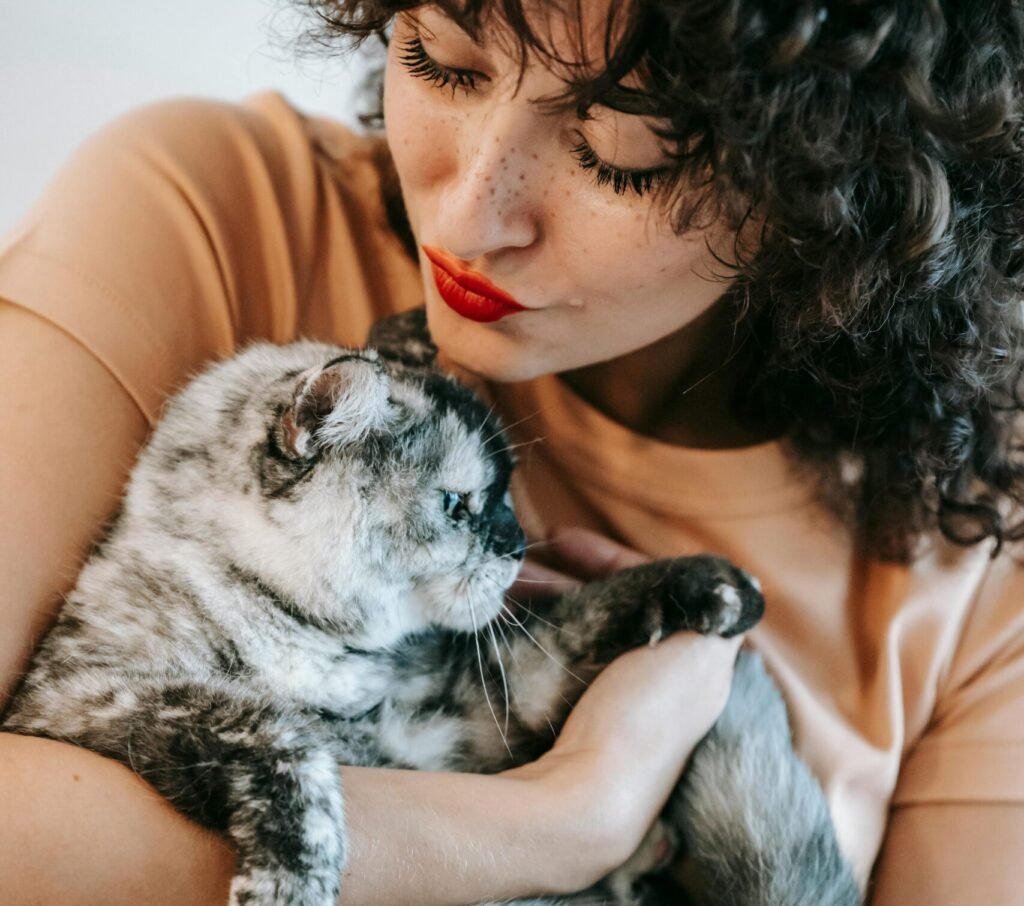
Do Cats Feel Love Even If They Don’t Like Kisses?
Absolutely. Studies in animal behavior suggest that cats form strong emotional bonds with their caregivers. They may not express love in human ways, but they demonstrate attachment through proximity-seeking, vocalization, and stress responses when separated.
Love, for a cat, is about safety, predictability, and comfort, not physical gestures.
Better Ways to Say “I Love You” in Cat Language
If your cat doesn’t enjoy kisses, try alternatives that align more closely with feline communication:
- Slow blink at your cat and wait for them to blink back
- Gently pet areas they prefer, such as the cheeks or chin
- Sit quietly near them without forcing interaction
- Speak softly using a calm tone
- Let your cat initiate contact
These actions are far more likely to be understood as affection.
What to Remember
Cats don’t naturally understand kisses the way humans do, but they can learn what your affection means over time. The key is paying attention to your cat’s individual preferences and respecting their boundaries.
True connection with a cat isn’t about how we express love. It’s about learning how they receive it.
Want to Understand Your Cat Better?
A cat’s reaction to kisses often depends on their temperament and individual personality traits.
Some cats enjoy close physical affection, while others feel overwhelmed – and neither reaction is “wrong.”
If you’d like to understand why your cat responds the way they do and how their personality shapes everyday behavior, explore our in-depth guide on feline temperament: